
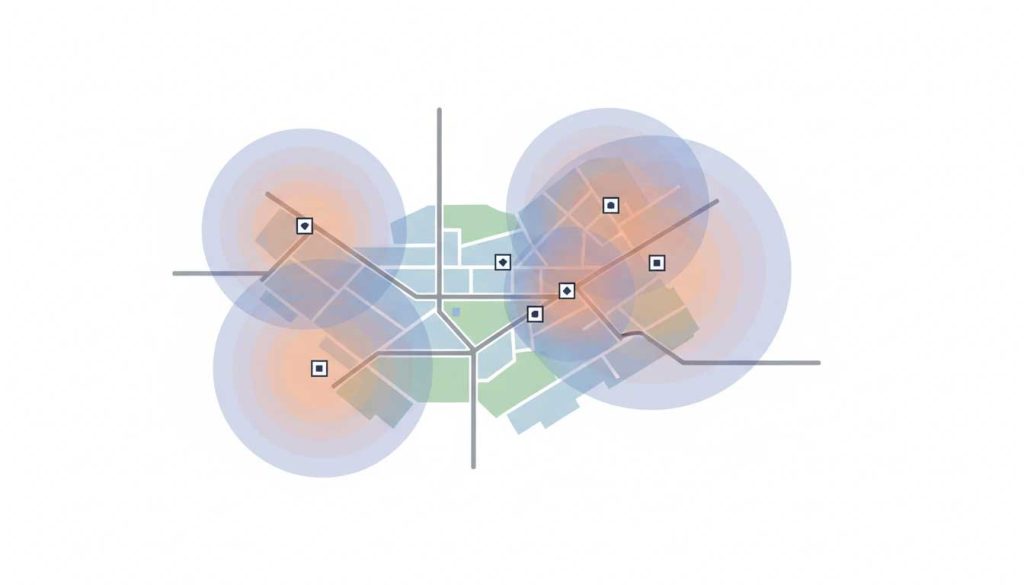
When business owners try to improve their Google Maps rankings, they often focus on individual tasks — getting more reviews, adding photos, updating their profile, or posting updates. While these actions can help, Google Maps rankings are not determined by one activity. They are determined by a combination of signals that work together.
To understand Google Maps rankings, it helps to understand that Google is trying to answer one question:
Which businesses are the best match for this search in this location?
Google evaluates this using three primary categories of signals.
Google publicly states that Google Maps rankings are primarily influenced by:
These three factors work together to determine which businesses appear in the map pack.
Relevance refers to how well a business matches what someone is searching for.
Google tries to understand:
Relevance signals come from:
If someone searches “drain cleaning near me”, Google will try to show businesses that clearly communicate drain cleaning — not just general plumbing.
This is why profile structure and website structure both influence rankings.
Distance refers to how close the business is to the person searching or the location included in the search.
If someone searches:
Distance is a limiting factor.
A business cannot rank everywhere.
This is why local rankings:
Distance is not something you optimize — it is something you understand and plan around.
Prominence refers to how well-known and trusted a business appears online.
Prominence signals include:
Prominence is often what separates businesses that all offer the same service in the same area.
If two businesses are equally relevant and located at similar distances, prominence often determines who ranks higher.
Many business owners believe Google Maps rankings come only from the Google Business Profile.
That is not entirely true.
Google often uses the business website to understand:
This means:
Your website and your Google Business Profile work together.
Businesses with:
often perform better in Google Maps than businesses with weak or unclear websites.
Reviews influence rankings in multiple ways:
Reviews help Google understand:
Reviews influence both prominence and relevance.
Other contributing signals include:
No single factor determines rankings.
Google Maps rankings result from many signals working together.
Google Maps rankings are:
This is why local visibility should never rely solely on Google Maps.
Businesses that build both Maps visibility and website visibility build more stable online growth.
Google Maps rankings are primarily influenced by:
But rankings are also influenced by:
Maps rankings are not controlled by one action.
They are the result of a business’s overall local online presence.
If you’re trying to understand Google Maps visibility and local search rankings, these articles explain how the system works and how businesses build long-term visibility.