
NEW WEBSITES & REDESIGNS
Website Structure Guide for Service Businesses
Plan Your Website Around the Services That Drive Your Business
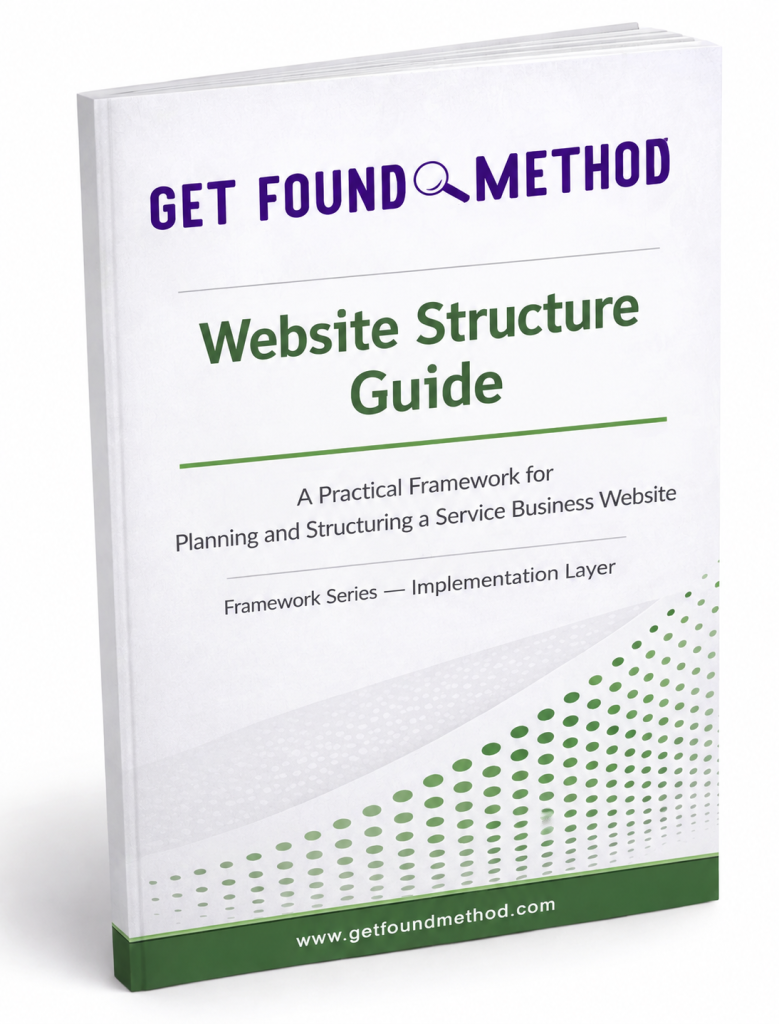
A Clear Plan for the Website Your Business Needs
Before you build, redesign, or invest in more SEO, decide which pages your website needs, what each page is responsible for, and which services deserve the most attention.
Finish with a Website Structure Blueprint: a page plan you can act on yourself or share with the person building your site.
$147
Digital guide · PDF download
Website Content Planning Starts Before You Write the Pages

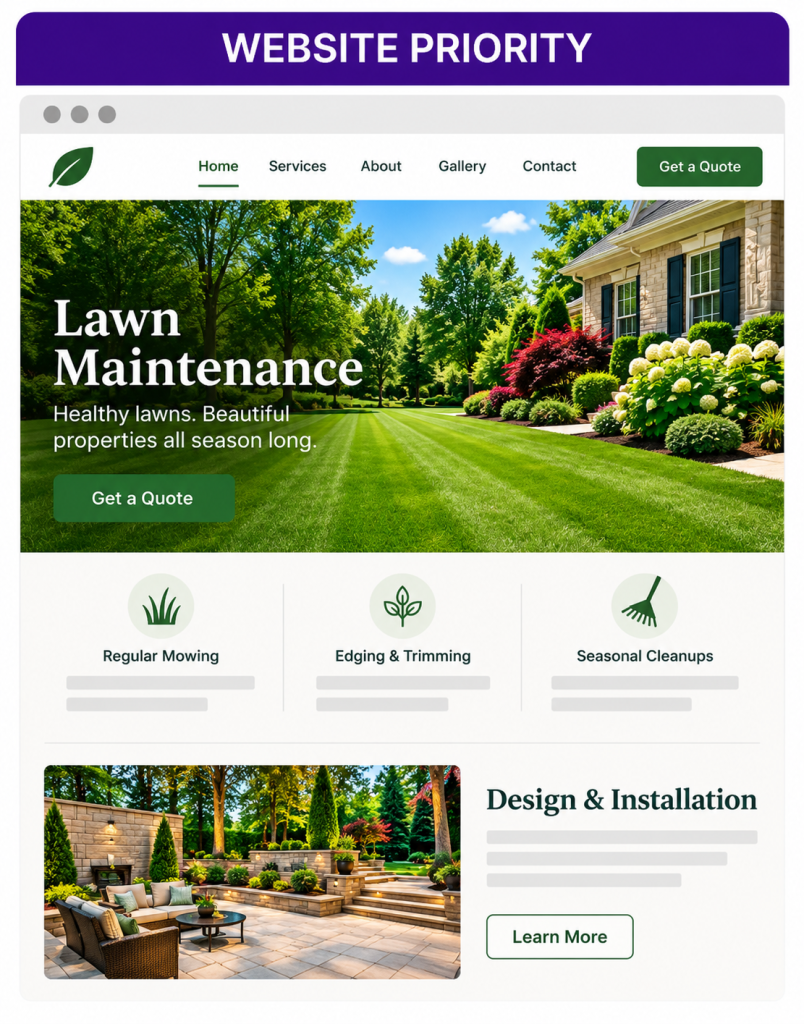
A service business website can look complete and still give the wrong services the most attention.
Consider a landscaping company whose design and installation projects generate most of its revenue. Its website has a polished homepage, an About page, and a general Services page. Yet installation work receives only a brief mention near the bottom, while routine lawn maintenance is featured front and center. Nothing about the website looks unfinished. The problem is that its structure gives less prominence to the services the company wants to grow.
Website content planning should begin with business decisions, not page copy. Before deciding what to write on each page, an owner needs to understand which services deserve their own place, which should receive greater prominence, and how the pages should work together.
A clear website structure gives the content a purpose before the writing begins.
Your Website Needs More Than a List of Services
A list of services tells customers what you do. Your website’s structure determines how you present those services, and it shapes more than most owners expect.
When a website is planned around business priorities, several things change:
Your most important services have room to stand on their own.
They can have dedicated pages that explain them, rather than receiving only a line on a shared Services page.
Every page has a clear job.
The homepage, service pages, and supporting pages each have a defined responsibility, so no single page is expected to do everything.
Customers reach the right information sooner.
Someone looking for a specific service has a clear place to learn about it, instead of scanning a general page for a passing mention.
Later decisions have a stronger starting point.
Content, SEO, and conversations with a web designer can build on an established structure rather than an assumed one.
The Website Structure Guide walks you through these decisions in order, helping you plan a website that reflects the business you’re building.
What's Inside the Guide
The Website Structure Guide takes you through 13 sections in a deliberate sequence, organized into five stages.
STAGE 01
Build Around the Business
Map what your business offers, who it serves, where it operates, and which services matter most before any pages are decided.
STAGE 02
Decide the Pages
Determine which services need their own pages, which belong together, how your service area should be represented, and what your homepage, About, Contact, and overview pages are each responsible for.
STAGE 03
Structure the Page Content
Plan what each important page needs to communicate, the order customers need that information in, and where visuals genuinely help.
STAGE 04
Connect the Website
Plan how customers move between pages, what belongs in your main navigation, and what each page’s web address should be.
STAGE 05
Turn It Into a Plan You Can Use
If you already have a website, compare it against your plan to see what should stay, change, or go. Then bring everything together into a finished Blueprint you can build from yourself or hand to a designer, developer, or agency.
WHAT YOU’LL FINISH WITH
Your Website Structure Blueprint
One working plan that brings your website decisions together.
Who This Guide Is For
The Website Structure Guide is written for service business owners who want to make informed decisions about their website, whether they do the work themselves or hire someone to do it.
It’s especially useful if you are:
Building your first website and want to know what pages it needs before choosing a template or hiring a designer.
Planning a redesign and want the new site organized around your current services and business priorities, rather than how the old site happened to be built.
Reviewing an existing website whose structure no longer supports the business. Services have changed, priorities have shifted, or pages have been added over time without a plan.
Serving several towns or a wide service area and unsure how much of that geography your website should represent.
Weighing a recommendation from a designer, agency, or SEO provider, such as adding pages, creating location pages, or restructuring the site, and want a sound basis for deciding.
The guide helps you plan what each important page needs to communicate, which information deserves the most attention, and the order in which customers need that information. Writing the final copy, designing the pages, and building the website come afterward, so those next steps follow an established plan.
See Each Decision Applied, Then Make Your Own
The guide is designed to be used while you work on your website, not read once and set aside.
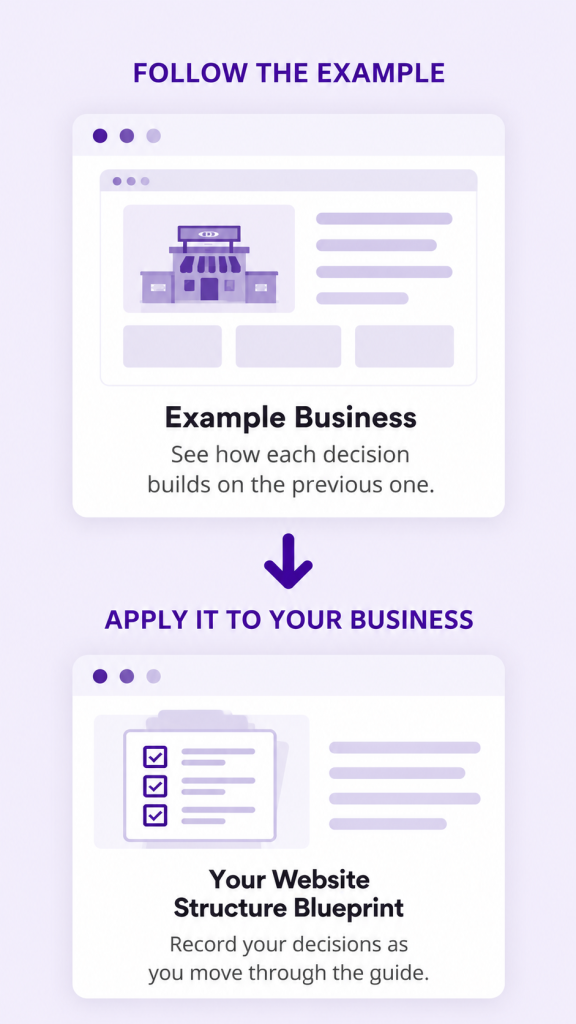
One example business, start to finish.
A single example service business is carried through every stage, so you can see how each decision builds on the ones before it, from mapping the business to the finished Blueprint.
Short examples from other industries.
Where the main example can’t illustrate a situation, such as multiple physical locations or distinct customer groups, brief examples from other kinds of service businesses fill the gap.
Your Blueprint grows as you go.
Most sections end by adding their decisions to your own Website Structure Blueprint, so your plan takes shape alongside the learning instead of all at once at the end.
Your reasoning stays on record.
For key decisions, you note why you made them. When someone later suggests adding pages or restructuring the site, you can return to that reasoning instead of starting over.
The guide doesn’t force an answer when the right decision depends on information you don’t have yet. Instead of filling the gap with an assumption, it keeps that decision open until you have the information needed to make it.
Where This Guide Fits
You don’t need any other Get Found Method product to use the Website Structure Guide. If you want to go further, here’s how it relates to the rest of the system.
Local SEO Playbook
The foundation. It explains how local visibility works and the order in which local SEO decisions should be made. It includes the Search-to-Lead Companion. If you want the broader picture before focusing on your website, start here.
Keyword Evaluation & Mapping Guide
How to evaluate search terms and determine which pages should be responsible for them. The Website Structure Guide helps you decide which pages should exist. The Keyword Guide goes deeper into evaluating and mapping the search terms those pages may need to support.
Google Business Profile Strategy Guide
How to approach your Google Business Profile, including how service areas and locations are set up there. The Website Structure Guide covers how your website represents that same business.
Want the full set?
The Complete GFM System includes the Local SEO Playbook, the Search-to-Lead Companion, the Website Structure Guide, the Keyword Evaluation & Mapping Guide, and the Google Business Profile Strategy Guide for $497, compared with $588 purchased separately.
Frequently Asked Questions
How is the guide delivered?
The Website Structure Guide is a PDF. After purchase, you’ll be taken to a confirmation page where you can download it right away. Save it to your device, since download links may expire. We also send a receipt to the email address used at checkout.
Is the Website Structure Blueprint a separate download?
No. As you work through the guide, you add your decisions to the Blueprint, so by the final section it reflects your business and your website.
Do I need the Local SEO Playbook or another guide first?
No. The Website Structure Guide stands on its own. If you’d like the broader picture of how local visibility works, the Local SEO Playbook covers it.
Will this work if I already have a website?
Yes. You’ll build the structure your business needs, then compare that plan with your current website. The guide treats changes to established pages carefully, since some may already have search visibility worth protecting.
Do I need technical skills or a particular website platform?
No. The guide focuses on the decisions behind your website, not on operating a specific website builder, so you can use it with any platform or with whoever builds your site.
Does the guide write my content or design my pages?
No. It helps you decide what each page should cover, which information deserves the most attention, and the order customers need it in. Writing the final copy, designing the pages, and building the site are separate steps. Blog posts and other ongoing articles are outside its scope as well.
Can I share my Blueprint with my web designer?
Yes. Your completed Blueprint is yours to share with the designer, developer, or agency working on your website. The Website Structure Guide itself is licensed for your use and should not be shared.
Will this improve my search rankings?
No guide can promise rankings. A clear structure helps search engines and customers understand what your business offers, but results depend on many factors, including competition and how the plan is carried out.
Plan Your Website Before You Build or Redesign It
A strong website starts with clear decisions about what the business needs it to represent.
The Website Structure Guide helps you make those decisions in order and turn them into a Website Structure Blueprint you can use yourself or share with the person building your site.
$147
Digital guide · PDF download